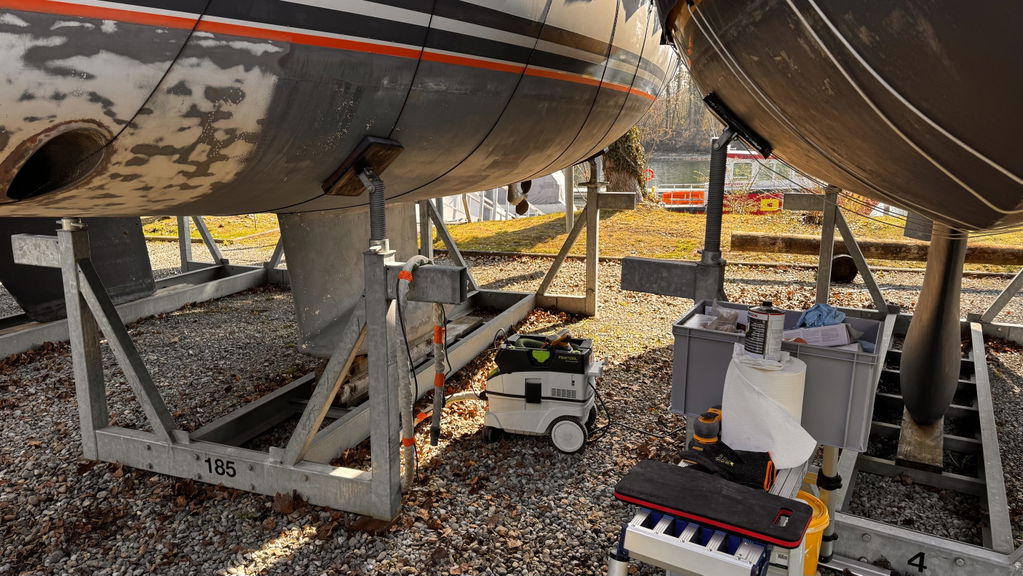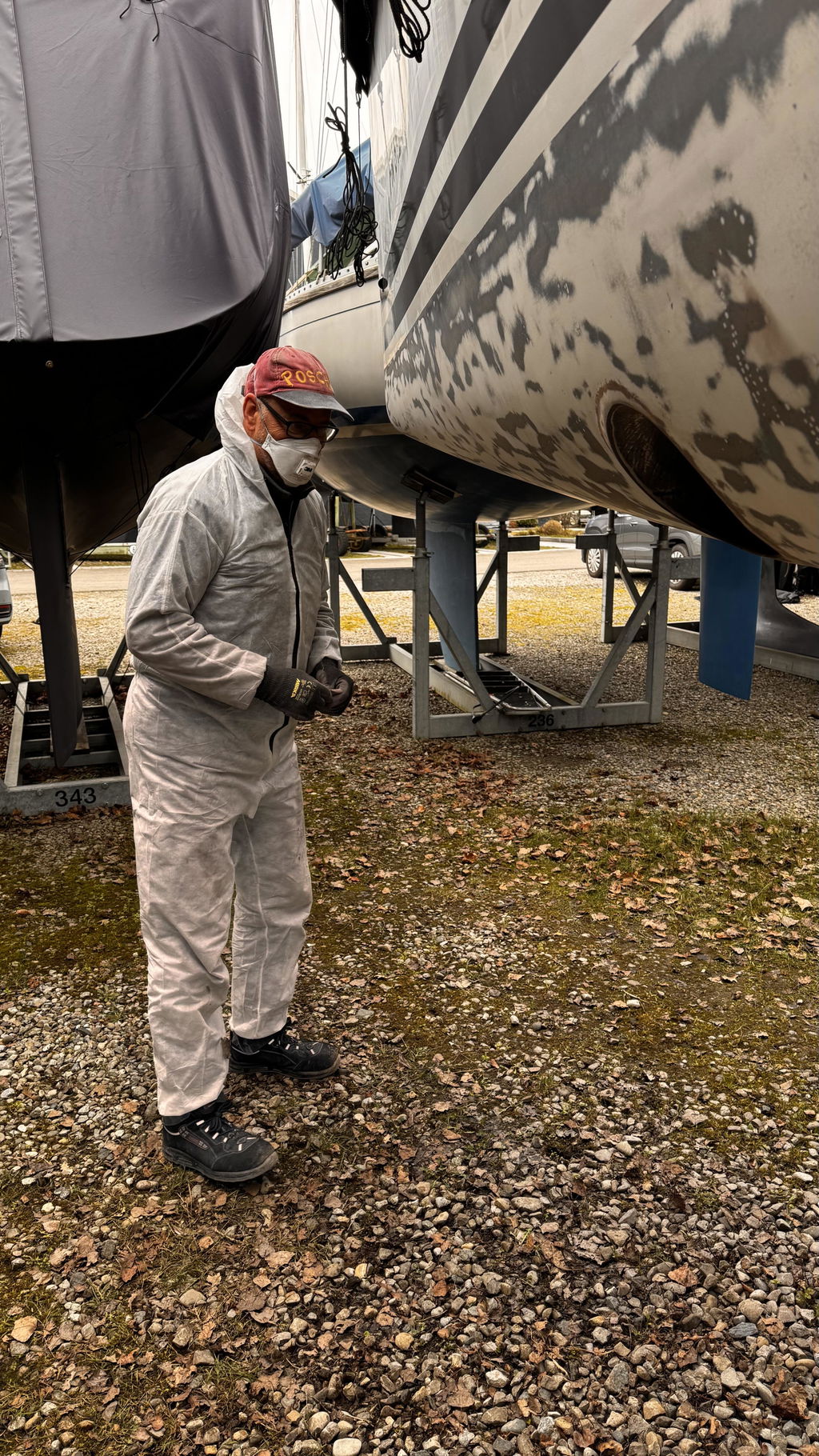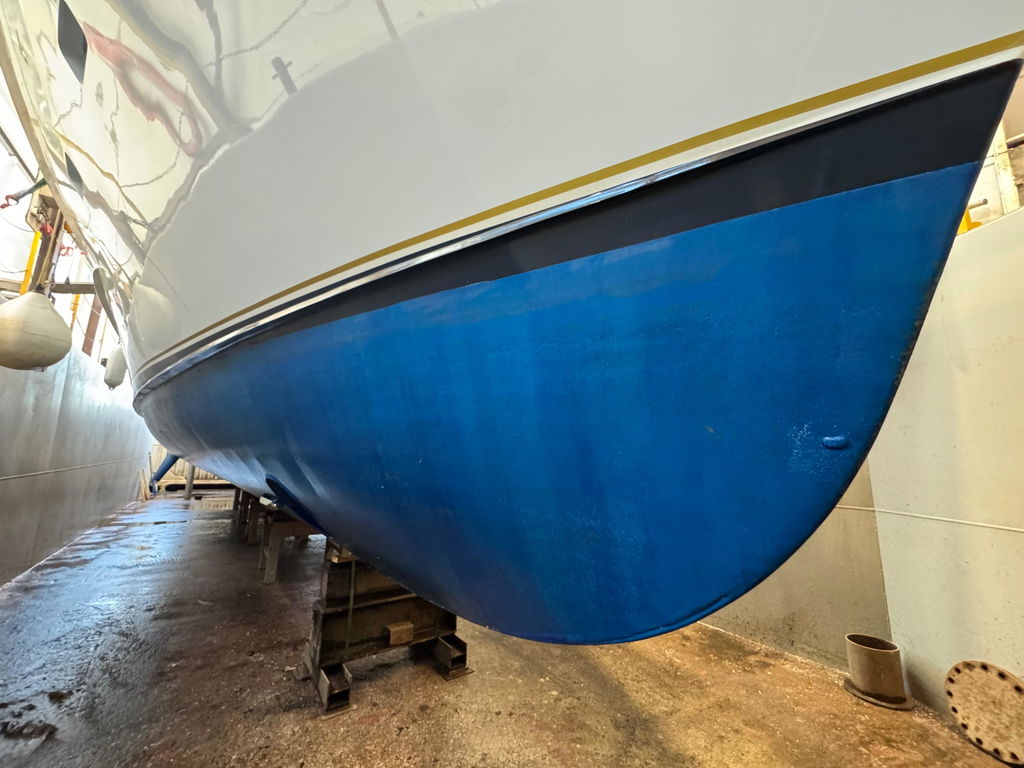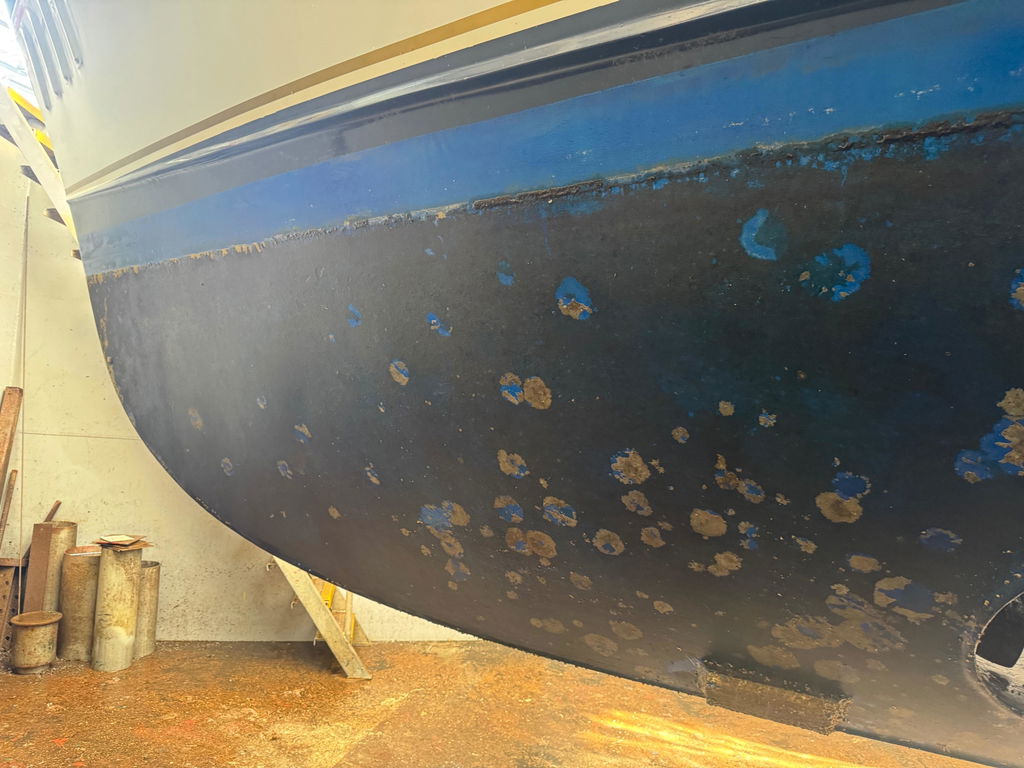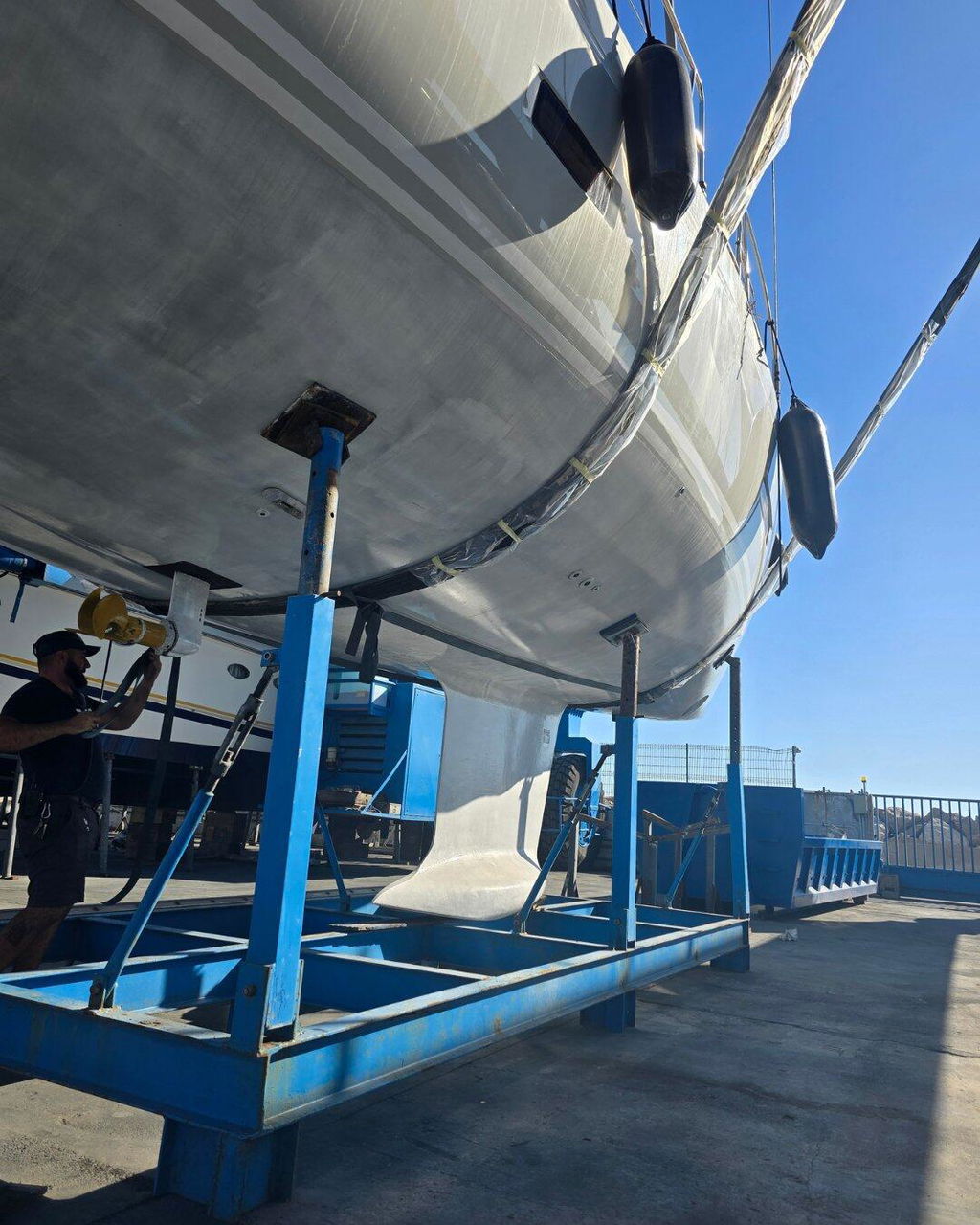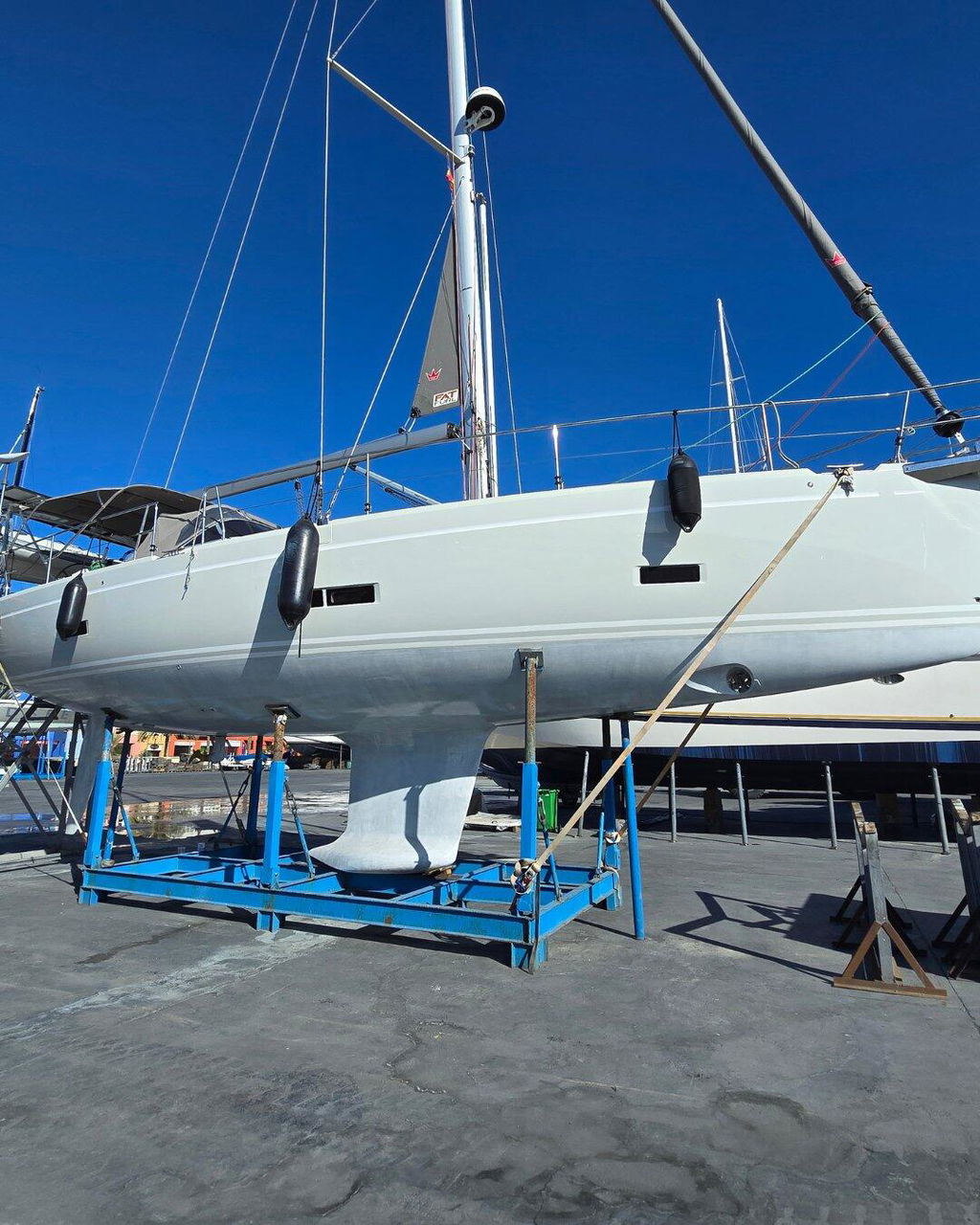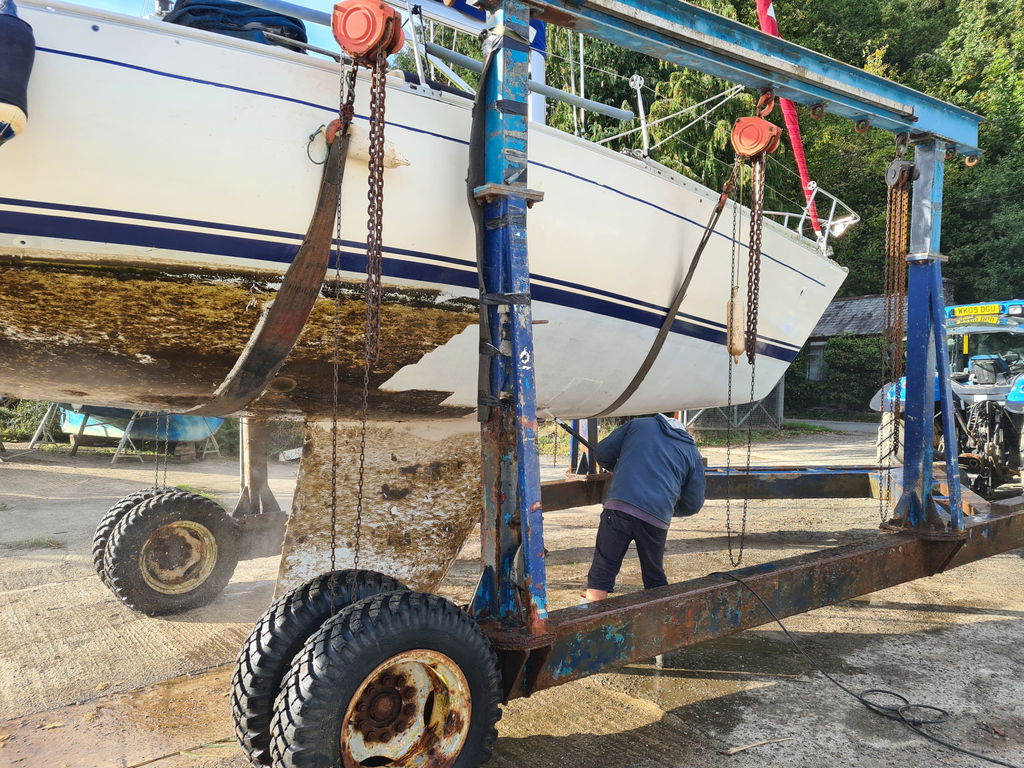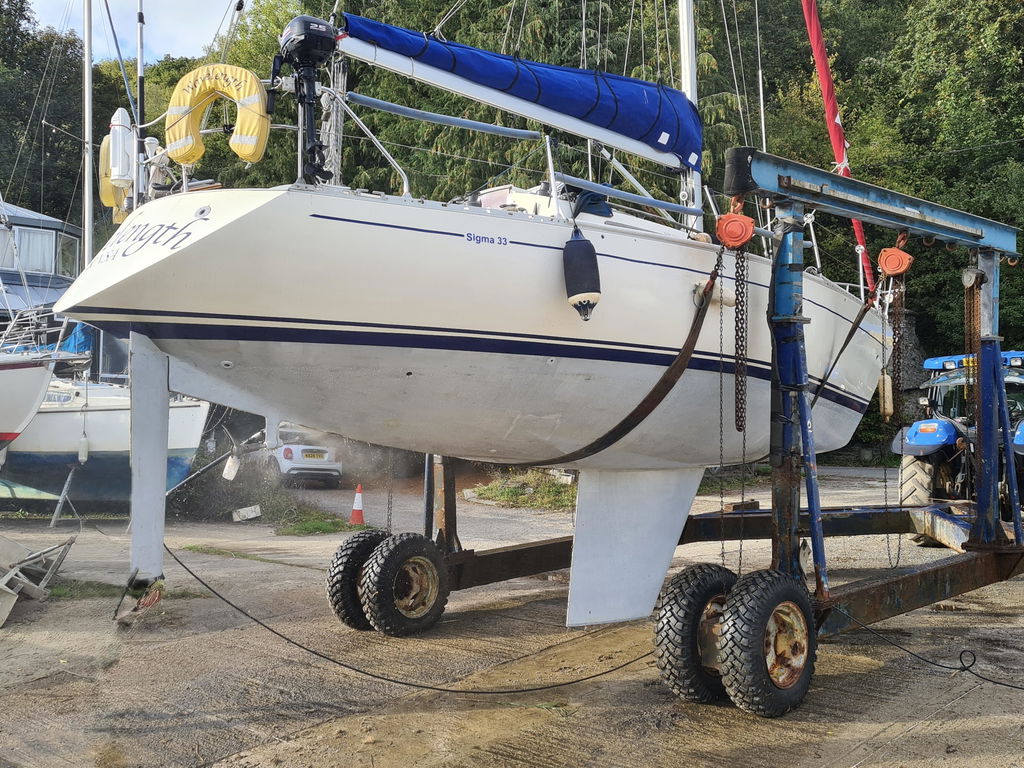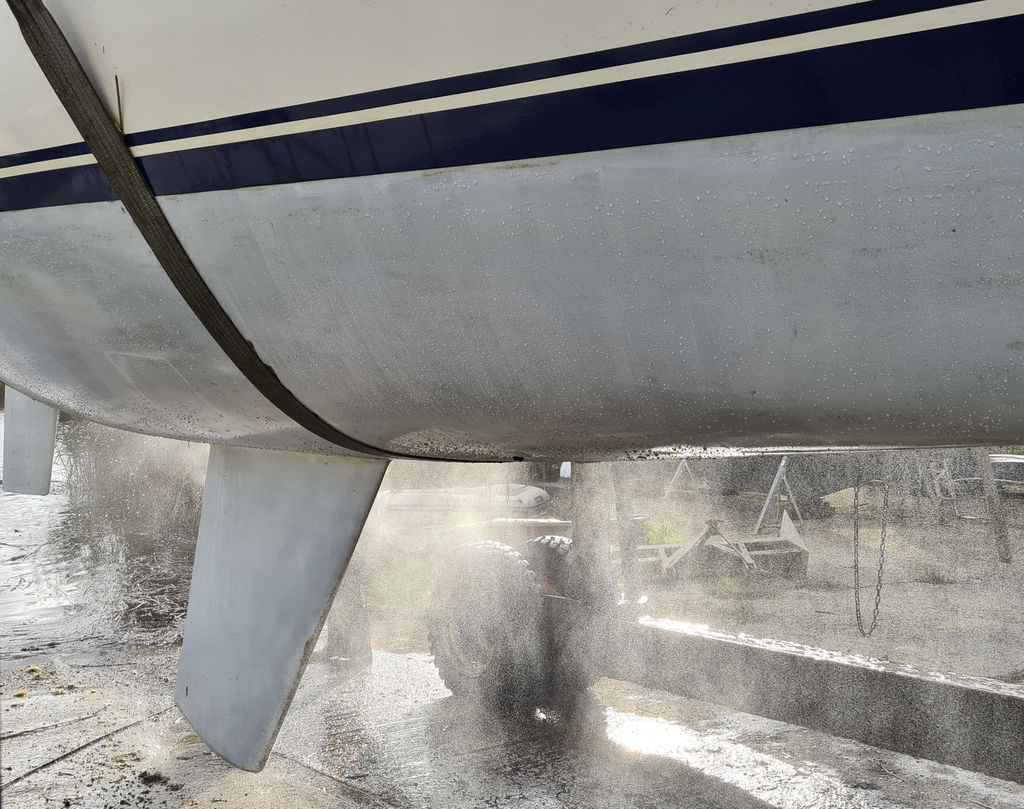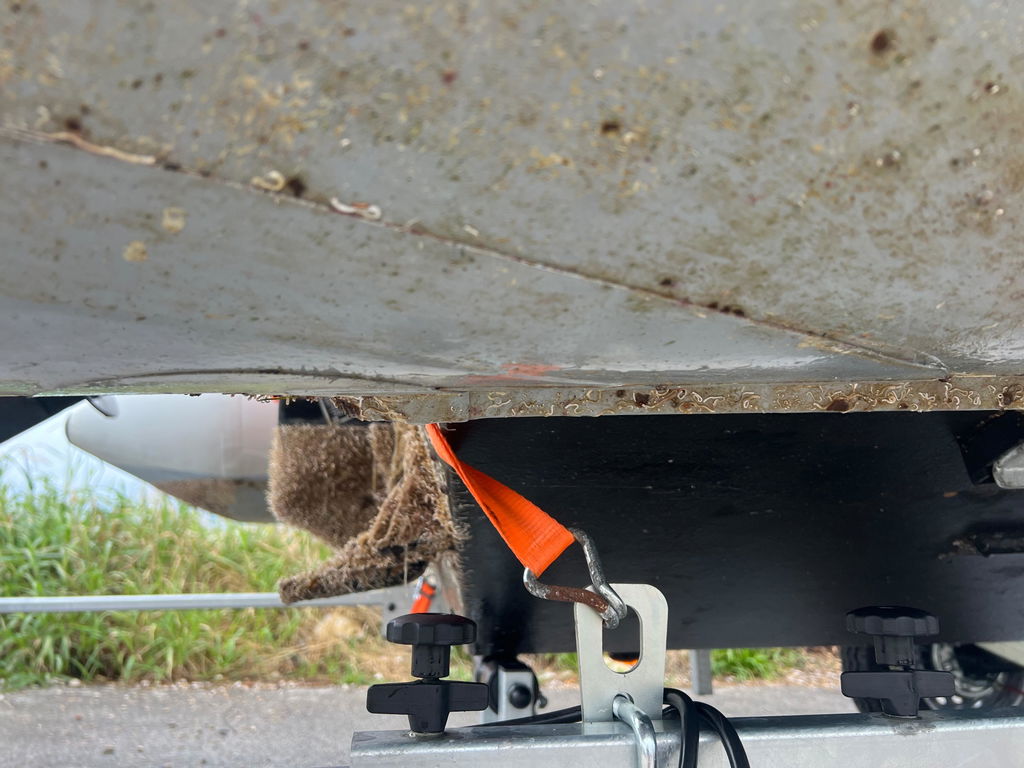

Seit über einem Jahr haben wir nun F2Eco als Antifouling und sind sehr zufrieden. Das Boot ist speziell bei der Erstwasserung und nach dem ersten Reinigen nach einem Jahr sehr sehr schnell. Bei gleicher Motordrehzahl fahren wir nun deutlich über sechs Knoten, mit dem alten Antifouling lagen wir um die fünf Knoten. Nach ein paar Monaten stellte sich dünnfadiger, hellgrüner leichter Algenbewuchs ein, der sich aber leicht mit Schwamm, besser mit Dampfstrahler, entfernen lässt. Insgesamt ist der Unterboden sehr, sehr glatt, hart und auch wirklich gut aussehend. Mal sehen, was die nächsten Jahre so bringen, aber alles sieht sehr gut aus.
Apply once.
Years of peace.
An honest comparison of F2 ECO with classic antifouling, Coppercoat and other systems.
What does F2 cost for your boat?Why start over every year, when there's another way?
Every season: haul out, sand down, repaint. And every year the same question: what goes onto the hull this time, and how much of it ends up in the water? Most owners take this cycle as a given. A clean hull versus clean water. F2 breaks that compromise: a smooth, biocide-free surface that fouling barely clings to, for years instead of just one season.
Effective by physics, not poison.
Classic antifouling kills off growth with biocides it constantly releases into the water. F2 EcoHull works differently. It forms a smooth, water-repellent surface that algae, mussels and barnacles can barely take hold of. Whatever does settle comes off as you sail, or with light cleaning.
Protection comes from the surface alone, so no biocides reach the water, and the coating does not wear away season after season. That is why it stays effective for years instead of needing to be redone every year. That this effect works in practice was confirmed by the independent institute ENDURES over seven months in the North Sea.

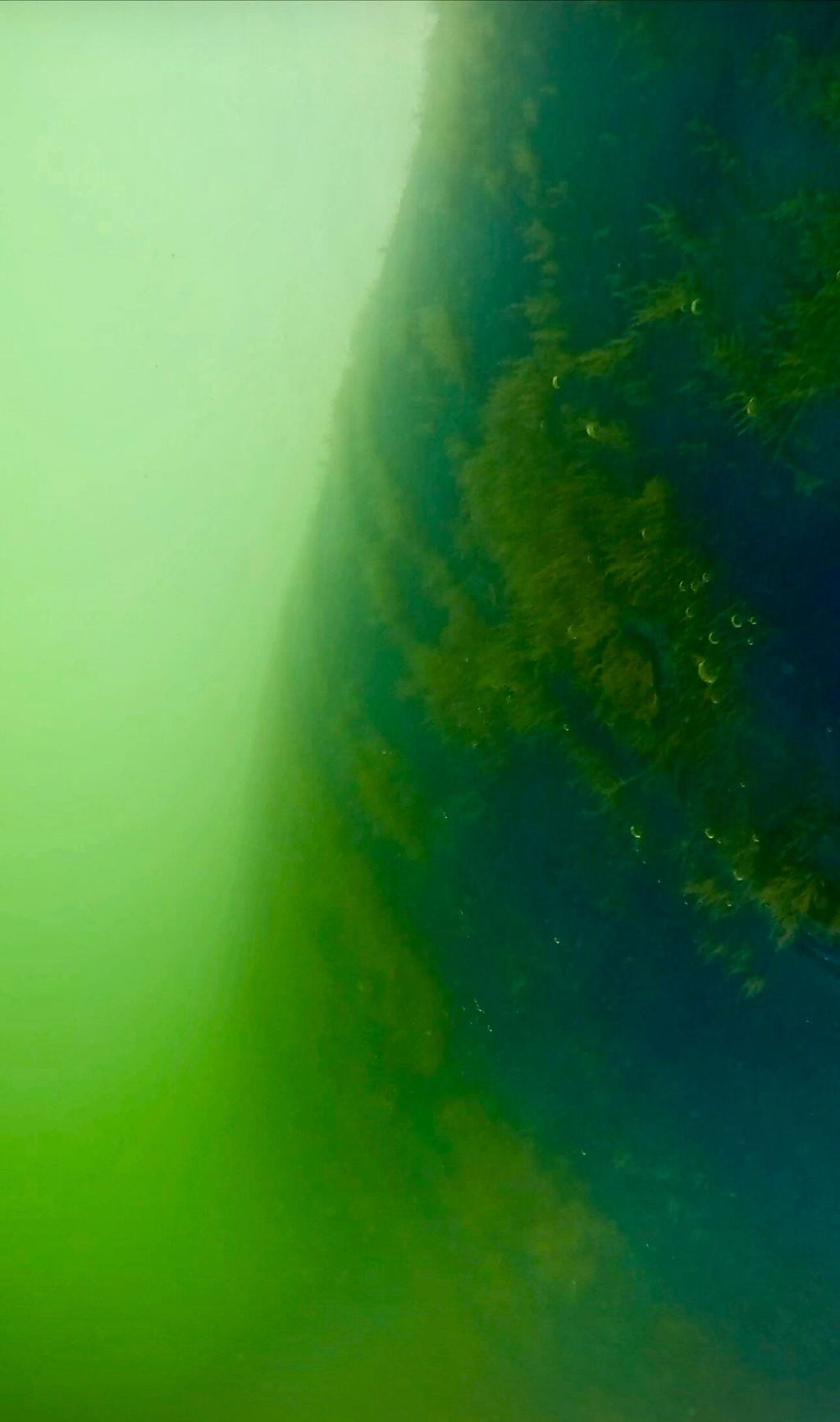
Without F2 EcoHull

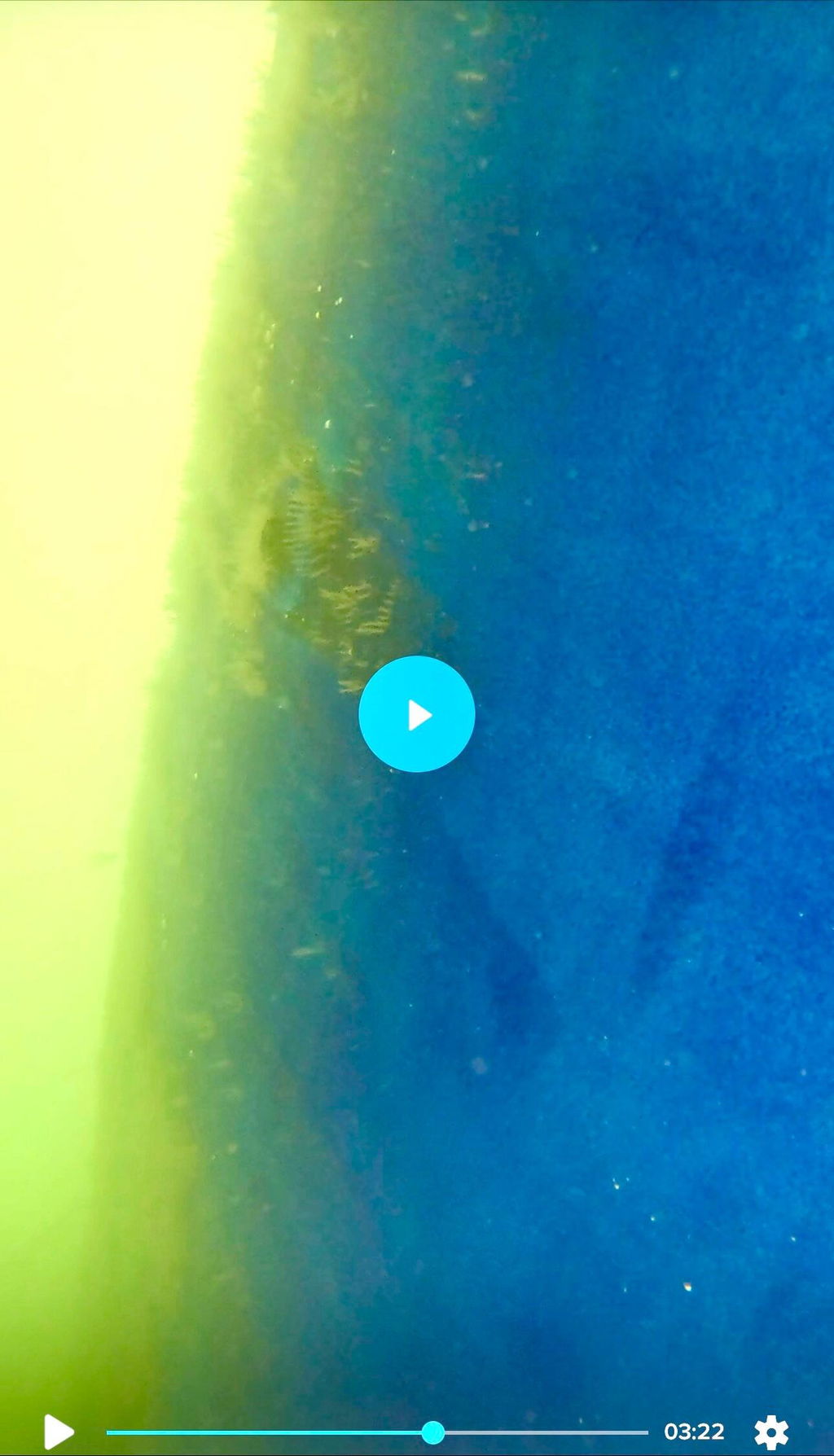
With F2 EcoHull
Antifouling options at a glance.
Same problem, different principles. Compare what fits your boat, what can enter the water and how often the system needs renewal.
As of 06/2026. Coppercoat and Hempel Silic One figures from their own product and safety data sheets and public sources. F2 environmental data from the independent tox report PSC2025100700 (F2 Adhesive and Top Coat).
Is F2 ECO right for your boat?
A good fit if
- you do not want yearly sanding and repainting
- you want to switch to a biocide-free alternative
- you think in years, not seasons
Check first if
- your old coating is unclear
- your boat sits unused in the water for long periods
- your area has high fouling pressure
Not the right choice if
- you want to paint over failing antifouling
- you expect a surface that never needs care
- you only want the cheapest seasonal coating
What boat owners say.
Good preparation is everything, it makes a lot easier, but there are a few things to consider when processing. My conclusion: dispose of tools properly after use; reuse is not advisable. Our boat is in water and the light slime on the waterline is super easy to wipe off with hand and water. I can't say yet whether the boat has become faster as a result of this coating. We'll leave it in the lake for the winter and then see what's happened next year. So far, I think the product is good. Everyone wanted to know what I was doing there and what it was called. Of course I said what the paint was called and when I applied it, I had the first imitator in the place next door.
Automatically translated
In 2025, we decided to use F2 EcoHull instead of the VC17, which has now been banned on Lake Constance. The processing was easy. Julia's support was always quick and reliable when it came to questions. We would choose the product again at any time.
Automatically translated
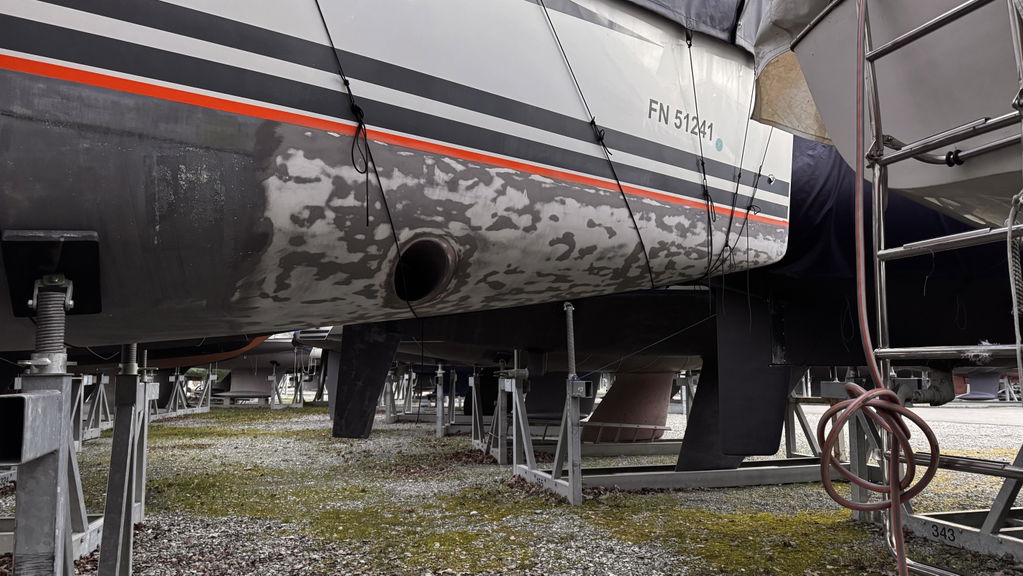
We rebuilt our underwater ship in March. Four days in a row, one coat of Hempel Light Primer, the Adhesive Coat on the fifth day and the Top Coat on the sixth day, unfortunately without glitter. After four weeks in the unheated hall, we went into the water on Fehmarn on April 17. Today, after six weeks in the Danish South Seas and only 110 nautical miles, brushed the hull from a dinghy for the first time to remove the considerable growth. It was very easy to remove from where I went. See pictures.
Automatically translated
We applied f2eco last year may 2025 on our 24 mtr motoryacht Yolanda. We spent 3 summer months on the English South Coast upto Plymouth. After that we returned to freshwater in our home province Friesland in the Netherlands. Our typicsl speeds are in the 10 knots range. From November till now boat was onnits berth and not moving.We just drydocked March 2 2026 because of a replacement of propellorshaft besrings. We are very pleased with the f2 eco redults. There was a thin slime layer and some muscles and shells but the were very loosly adhered to the coating and very easy removed with a soft high pressure rinse. The coating looks and feels in pristine conditions. A very few spots need some attention but I suspect preparation onbthose spots was not optimal. All in all very pleased. We will now also apply the propellor protection from f2eco. Ruurd and Yolanda Boomsma Motoryacht Yolanda
We coated our boat with F2 ECO a year ago because we wanted a durable and environmentally friendly anti-fouling solution. We have coated our CopperCoat with F2. The application was simple and easy to do in pairs at 40 feet, because you can also divide the different layers over several days. We are very satisfied with the result, and after one year in the Mediterranean & Atlantic (Canary Islands), we can say that biocides are no longer needed. The fact that you jump into the water from time to time during the season to get your fuselage clean is no different from our previous CopperCoat. But with F2 ECO, you have the big advantage that the growth is not stuck, but can simply be wiped away. So you can't access it with a spatula, but with a soft brush. And that makes cleaning much easier and much faster! In the meantime, we had to get out of the water once to repair the saildrive. On this occasion, we high-pressure cleaned the coating, which was possible without any problems. It still looks like new - even better, because it's now much harder than it was at the beginning. We are very satisfied!
Automatically translated
Wow! I am super impressed. Compared to the traditional anti-foulings I have used before, this is a real game changer. Firstly, boat speed has increased by approximately 0.75 knots ~15%. I have even managed to win individual ‘round the cans’ sailing races and my division for the season series. In addition, I have won my first handicap offshore race (against much more modern & bigger yachts) and came 3rd in another - not done that before in this boat! Boat speed has remained high through the season; I used a ‘Scrubbis’ sponge to clean the hull whilst in the water. Fuel consumption has also improved but a bit more difficult to quantify as I don’t use much. Secondly, at haul out, whilst there was slime over the hull (as expected), there was no ‘beard’ of weed as in previous years. In addition, any very limited hard grow was super easy to move with my fingers. Whilst on the hull, any hard growth hadn’t adhered to the coating. The shaft and prop were treated with a traditional anti-foul and this had heavy barnacle and weed growth, needing a metal scraper to remove. In the photograph you can see the clear difference between the prop and shaft to the ‘P’ bracket with its F2 Eco coating. The boatyard pressure washed the hull, with the slime and any very limited hard coming off really easily. The hull returned to the before launch condition with the water once more beading off the clean hull! Overall I am very impressed!
I use F2 on our the hull of our rib and what should i say, i love it. After on season as on the firts day.