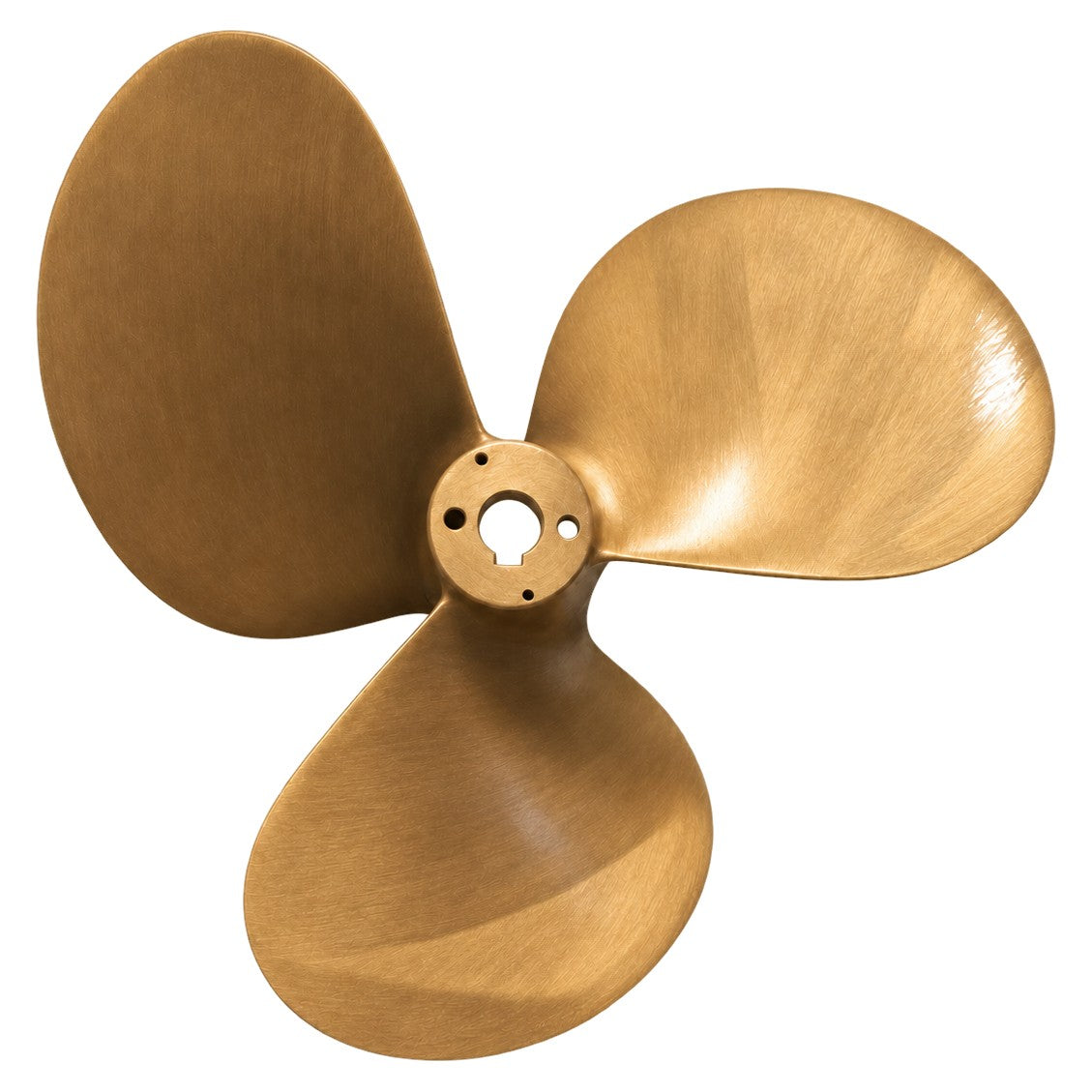
F2 OptiProp
Clean prop. More speed. Less fuel.
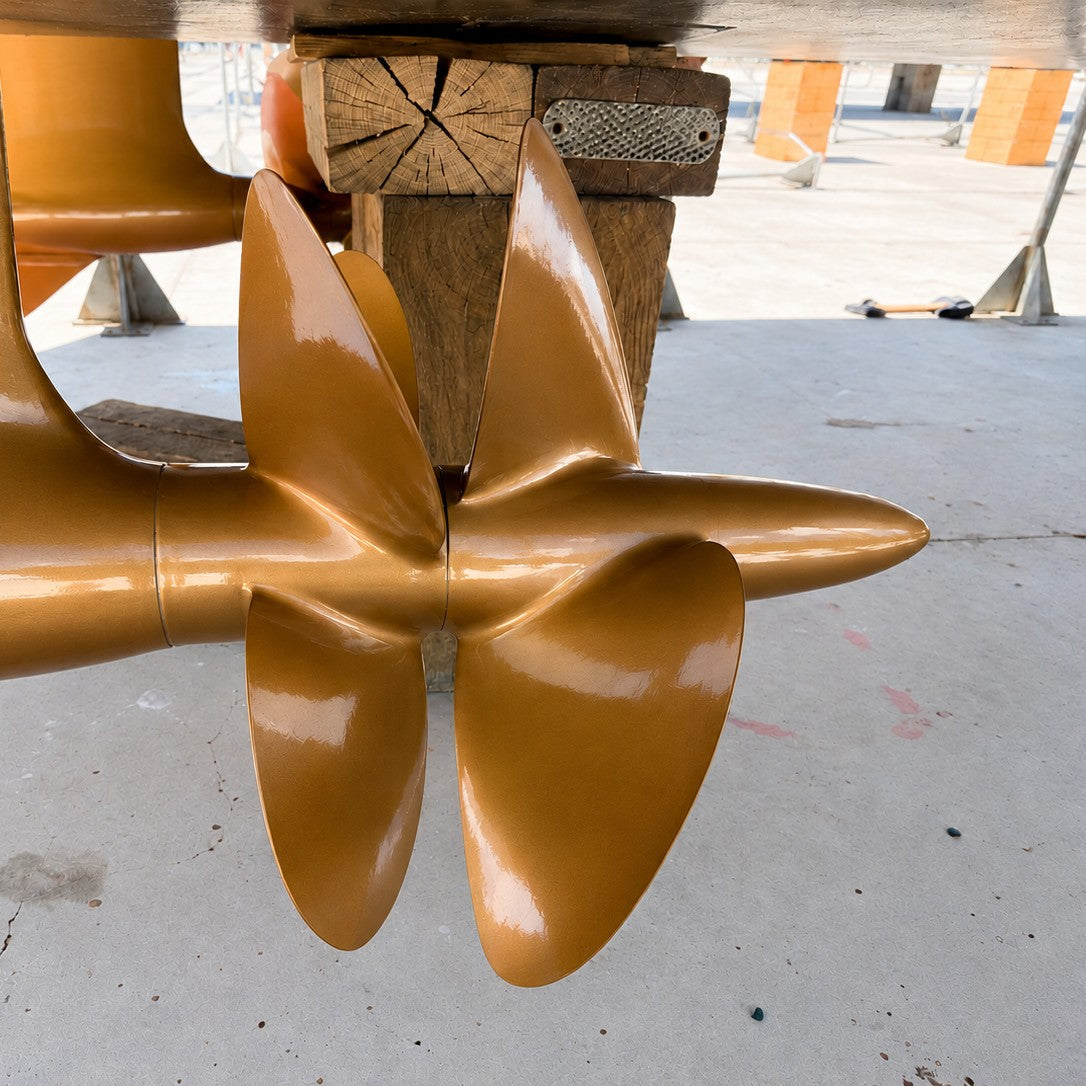
Fouling on the propeller costs thrust and fuel. On the smooth surface of F2 OptiProp it struggles to grip and is easy to remove.
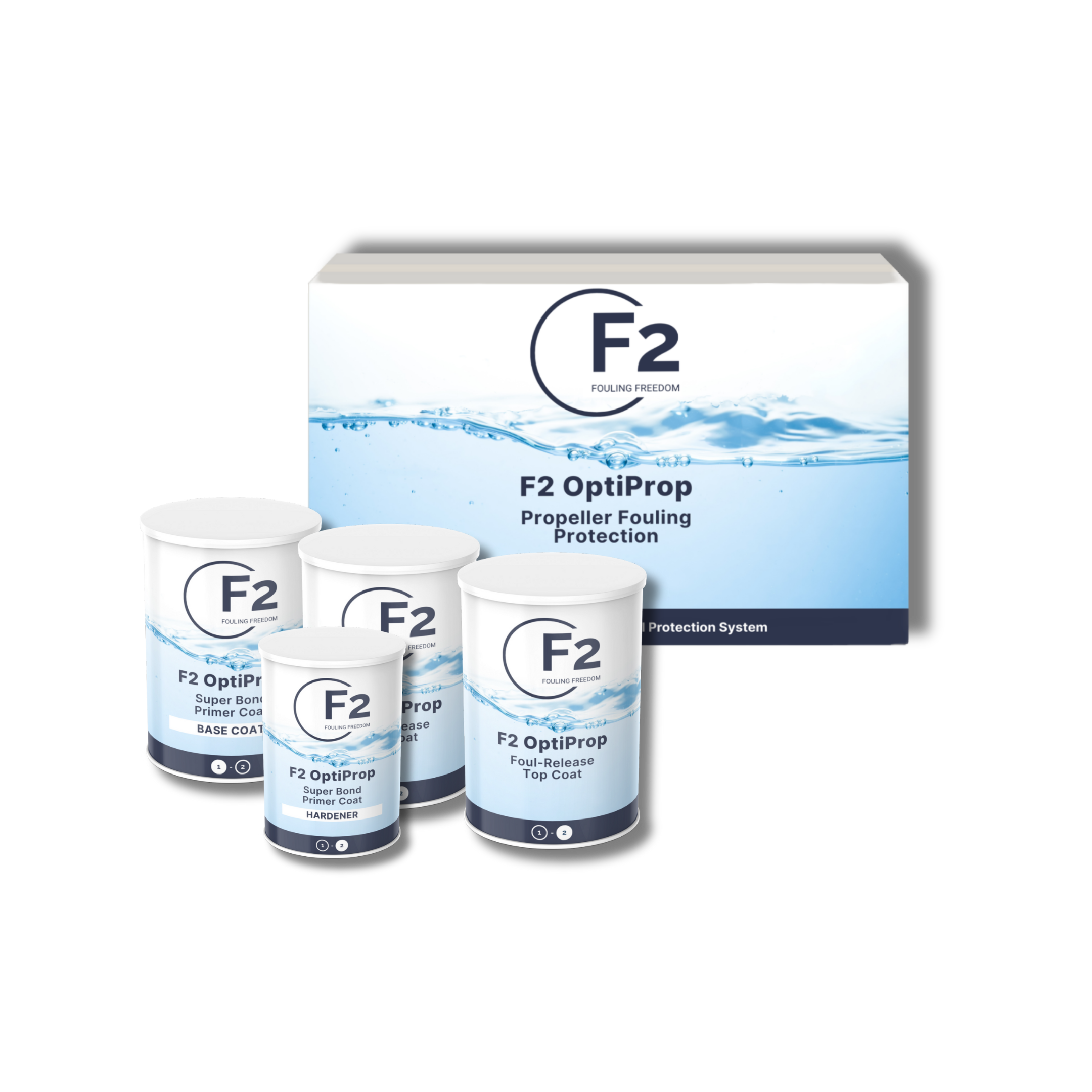
Kit size
Tax included. Shipping calculated at checkout
Which size do I need?
small covers approx. 1.0 m², medium approx. 2.5 m² of metal surface.
- One propeller up to approx. 60 cm (24 in)small
- One saildrive with propellersmall
- Two propellers up to approx. 60 cm or two saildrivesmedium
- One propeller over 60 cm (24 in)medium
- Propeller with shaft, P-bracket, rudder and trim tabsmedium
Guide values. Not sure? Send us the dimensions and we will tell you the right size.
Ready to ship
Safety information
Warning
Harmful if swallowed.
Causes skin irritation.
May cause an allergic skin reaction.
Causes serious eye irritation.
Why F2 OptiProp
Low hazard for people and aquatic life.
Less fouling shouldn't come at the expense of you or the water.
- No hazard warning for aquatic lifeNo component is classified as hazardous to the aquatic environment.
- Not flammableApplies to primer, Tie Coat and Top Coat.
- Solvent-freeThe coats contain less than 0.3 g/L VOC.
Still wear gloves and safety glasses when applying: some components irritate skin and eyes and can cause an allergic skin reaction. Safety data sheets

How application works.
F2 OptiProp is applied differently from conventional antifouling. At its core, you sand the metal bright, degrease it and then apply three coats. It takes careful preparation and working exactly to the guide. Apply above 10 °C and at no more than 80 % humidity.

-
1
Mask and sand
Mask anodes, shaft seals, bearings and threads, and the mechanism on folding and feathering propellers. Then machine-sand with P80 grit to bright metal.
-
2
Degrease
Wipe in one direction with F2 OptiProp Surface Activation Fluid and immediately wipe dry with a second cloth. Do not touch the surface afterwards.
-
3
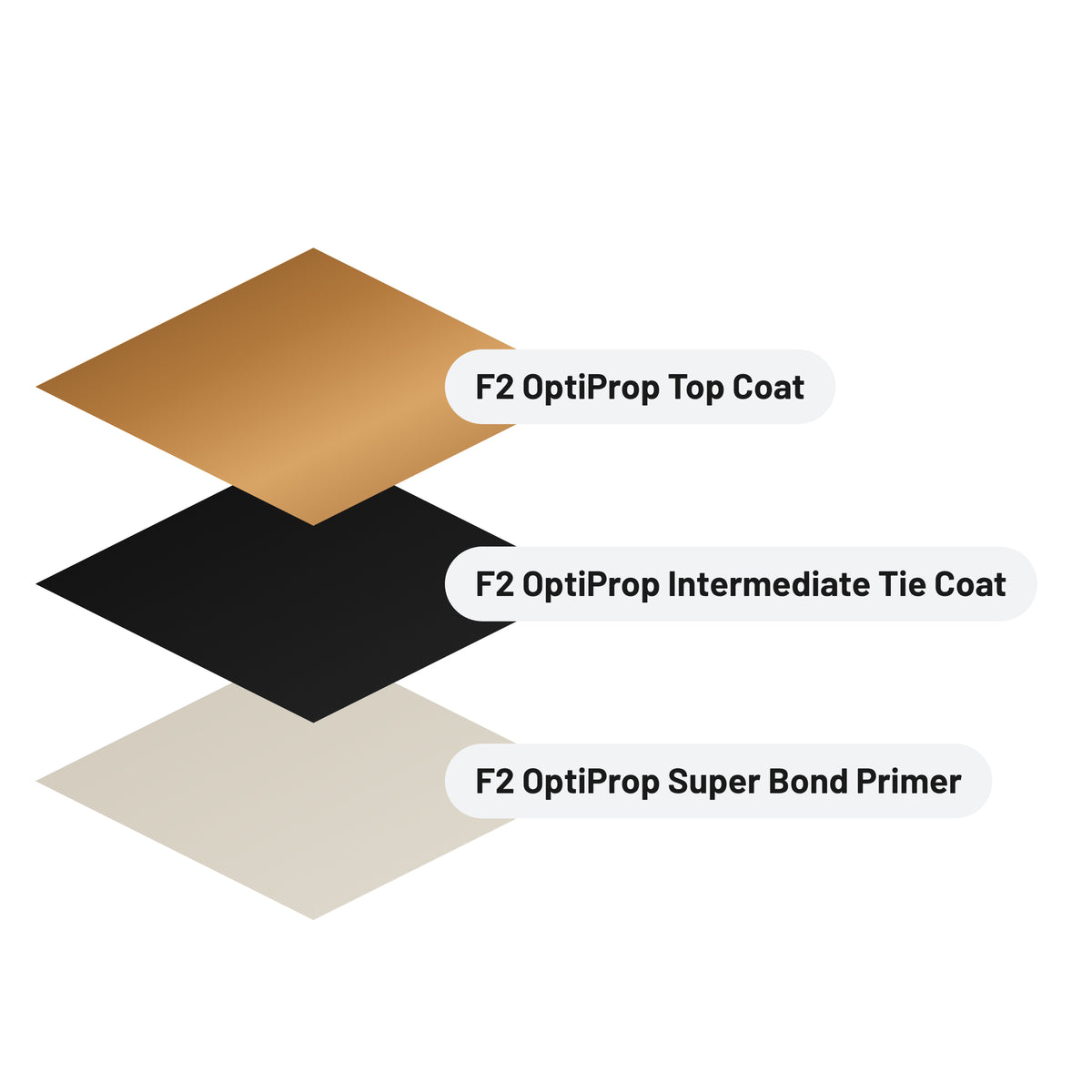
Super Bond Primer
Mix BASE and ACTIVATOR at 150:100 by volume and apply one thin coat. Pot life is 30 minutes at most at 20 °C, so only mix small amounts.
-
4
Tie Coat and Top Coat
After 4 to 6 hours, and within 24 hours at the latest, apply the black Intermediate Tie Coat. Another 4 to 6 hours later, the bronze Top Coat.
-
5
Launch and run in
Refit the anodes and check that propeller, shaft and mechanism move freely. Launch after 24 hours at the earliest, then run gently for three days.
Frequently asked questions.
How long does F2 OptiProp last?
With correct application and care, F2 OptiProp is designed for 12 to 24 months. How long the coating lasts depends on use, engine revs and the area.
Which size do I need?
The small kit covers about 1.0 m², the medium kit about 2.5 m². “Which size do I need?” right below the size selection shows which size fits your running gear. If you are unsure, send us the propeller diameter, material and type.
Which materials and parts is F2 OptiProp suitable for?
For stainless steel, bronze, brass, NiBrAl, aluminium and plastic, and for folding and feathering propellers. Suitable parts are fixed and folding propellers, shafts, saildrives, trim tabs, and bow and stern thruster propellers.
Saildrive and trim tabs: F2 OptiProp or F2 EcoHull?
Saildrives and trim tabs are better coated with F2 OptiProp. F2 EcoHull is made for the underwater hull, meaning hull, rudder and through-hulls.
Does the old coating have to come off the propeller?
Yes. The guide calls for bright metal: machine-sand with P80 grit until all old coatings and oxidation shadows are gone, without changing the propeller profile.
What are the most common mistakes when applying?
These four points decide whether the coating bonds:
- Sanding by hand. Machine-sand with P80 grit to bright metal, with no dark oxidation shadows left.
- Poor degreasing. Grease and residues are the most common cause of adhesion problems. Wipe in one direction with Surface Activation Fluid, wipe dry immediately and do not touch the surface with bare skin afterwards.
- Cold or damp metal. The surface must be at least 3 °C above the dew point, otherwise invisible condensation forms. Also above 10 °C and no more than 80 % humidity.
- Missing the primer window. The Intermediate Tie Coat must go on within 24 hours of the primer. After that, sand with P180 and degrease again first.
What must not be coated?
Anodes, shaft seals, bearings and threads. Anodes need contact with bare metal. On folding and feathering propellers, mask joints, bearing surfaces and hubs, because the mechanism must stay free to move.
When can the boat be launched, and how do I clean the propeller?
You can launch 24 hours after the Top Coat at the earliest. For the first three days, run at gentle revs only, no full throttle. Clean with a soft cloth, soft brush or sponge, never with a metal scraper or abrasive pad.
Data sheets
The whole underwater hull
Coat the hull as well?
F2 EcoHull is the biocide-free antifouling for the hull. Enter your area or have it calculated, then choose colour and tools.
Configure for your boat